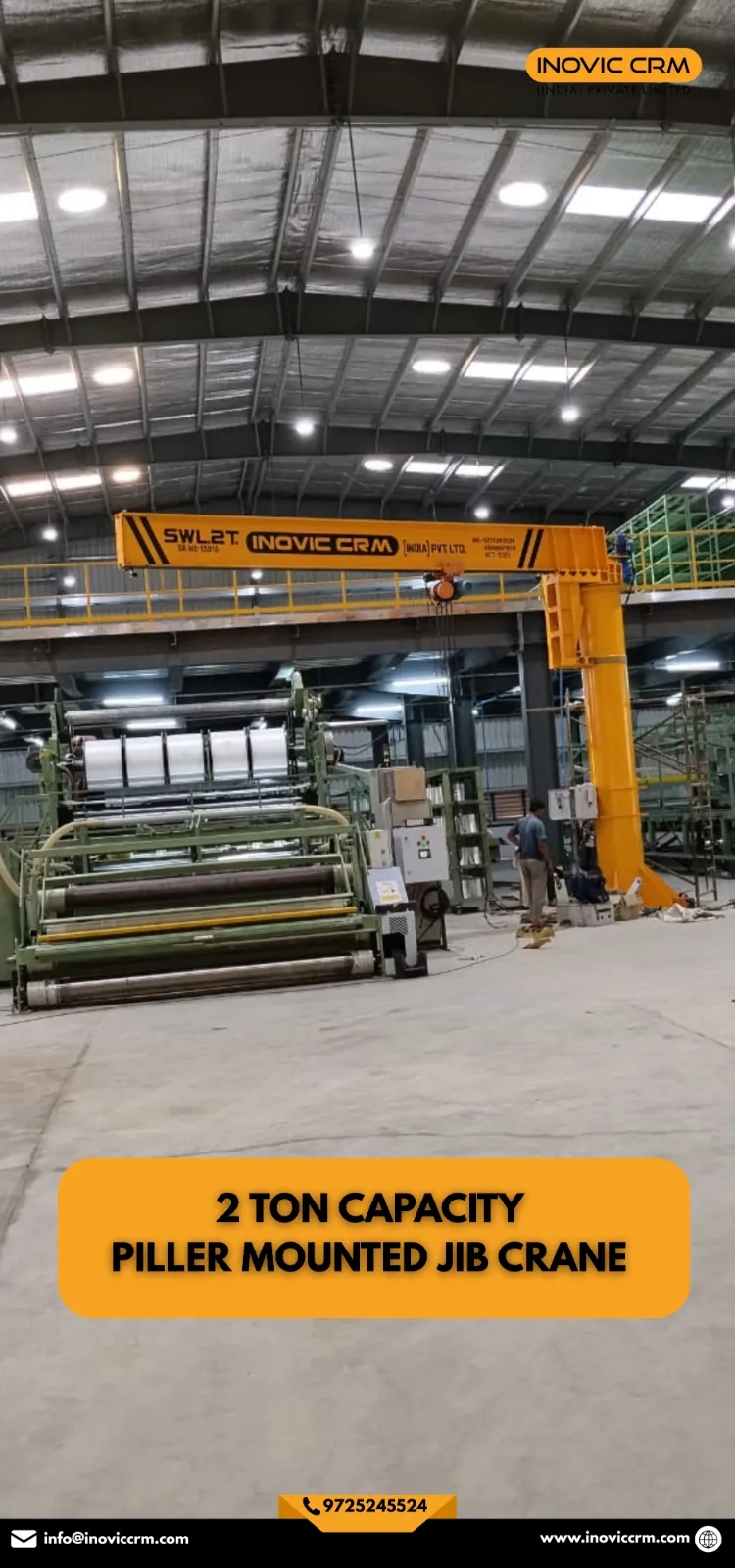
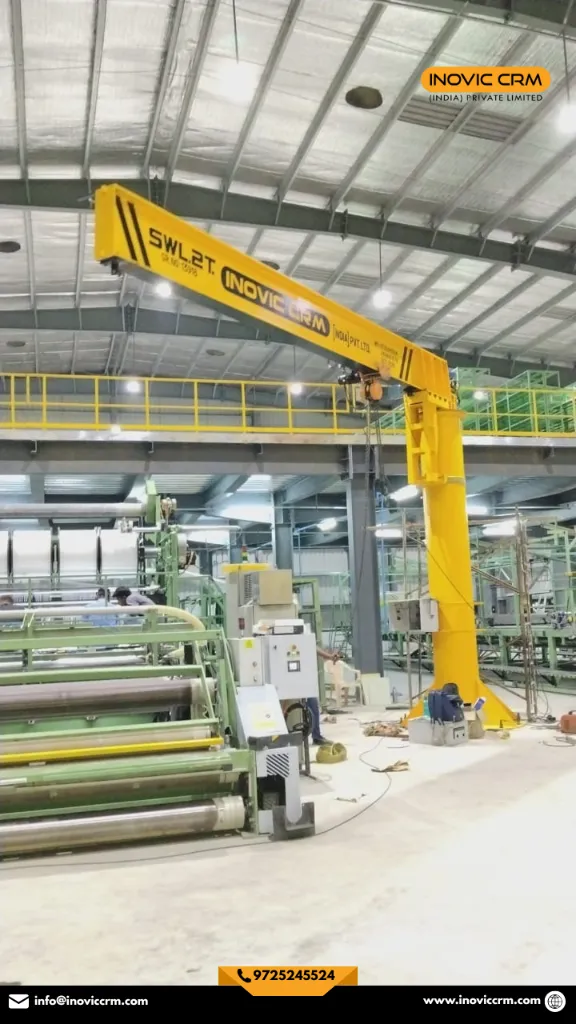
Types of Jib Cranes
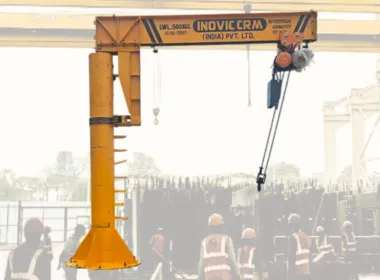
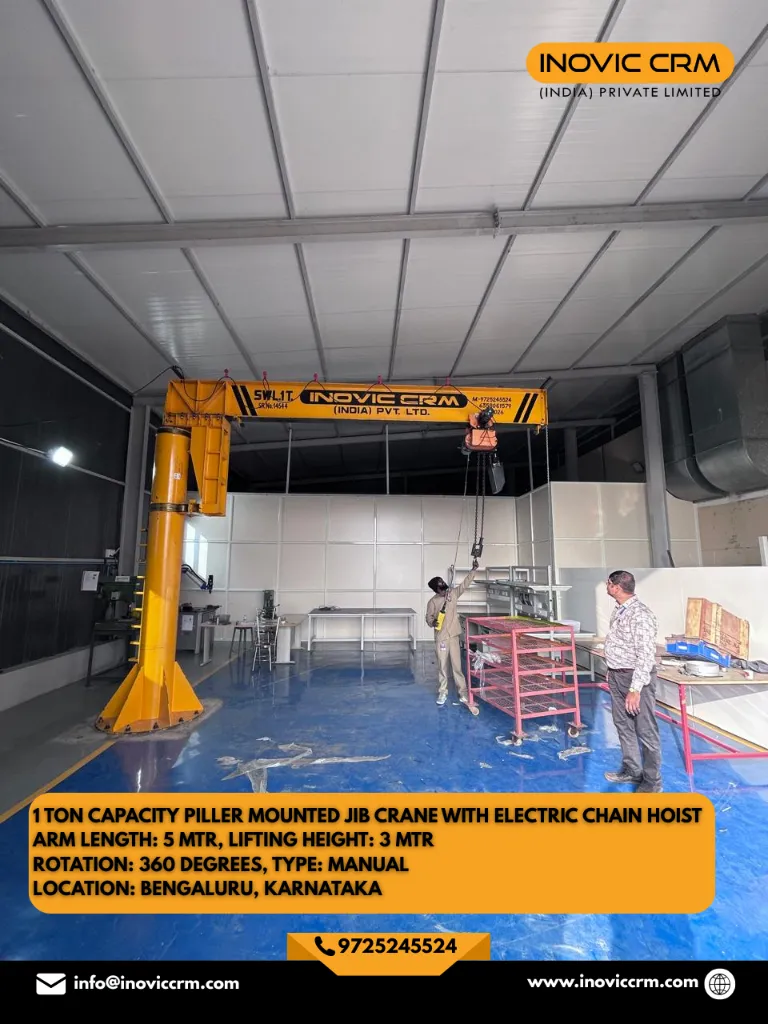
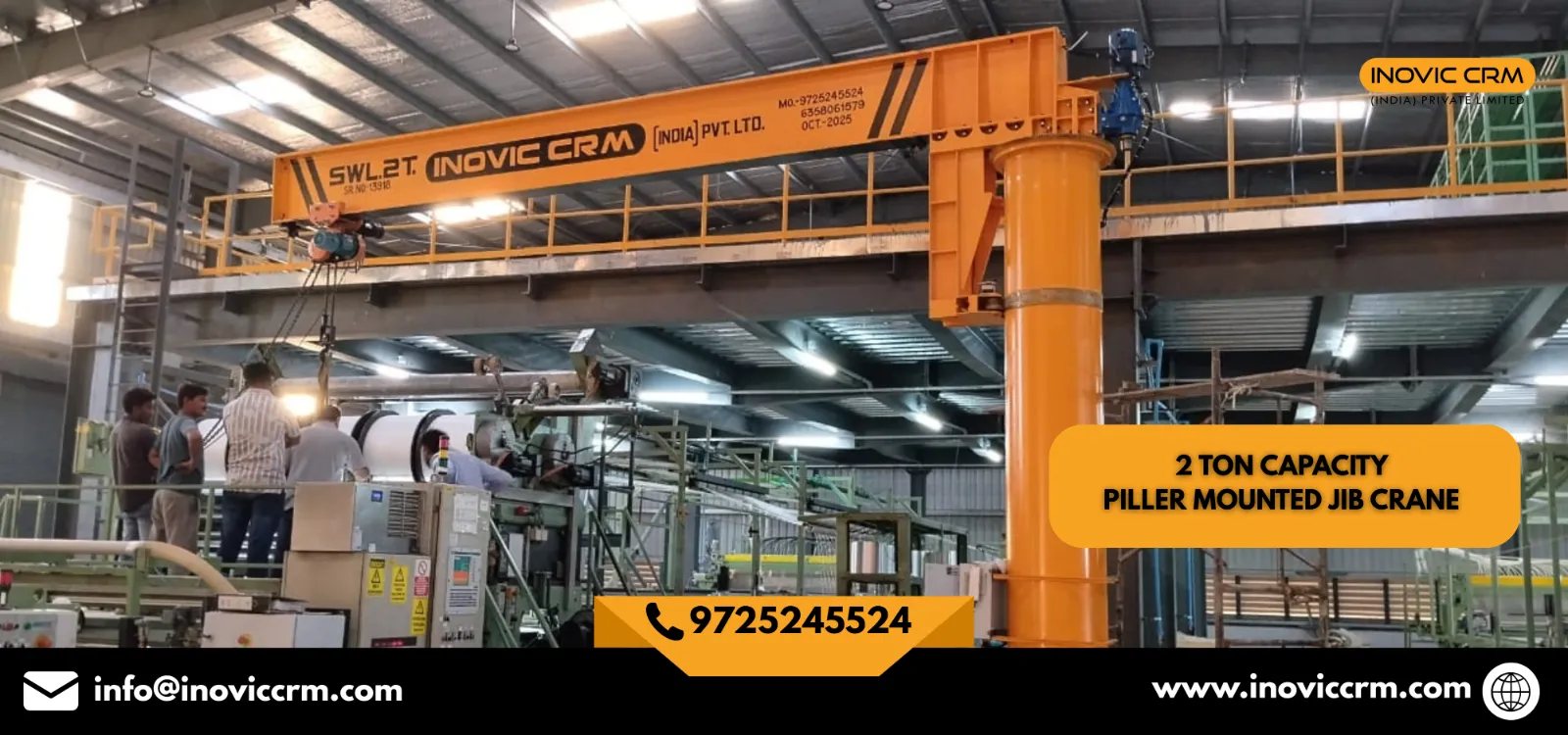
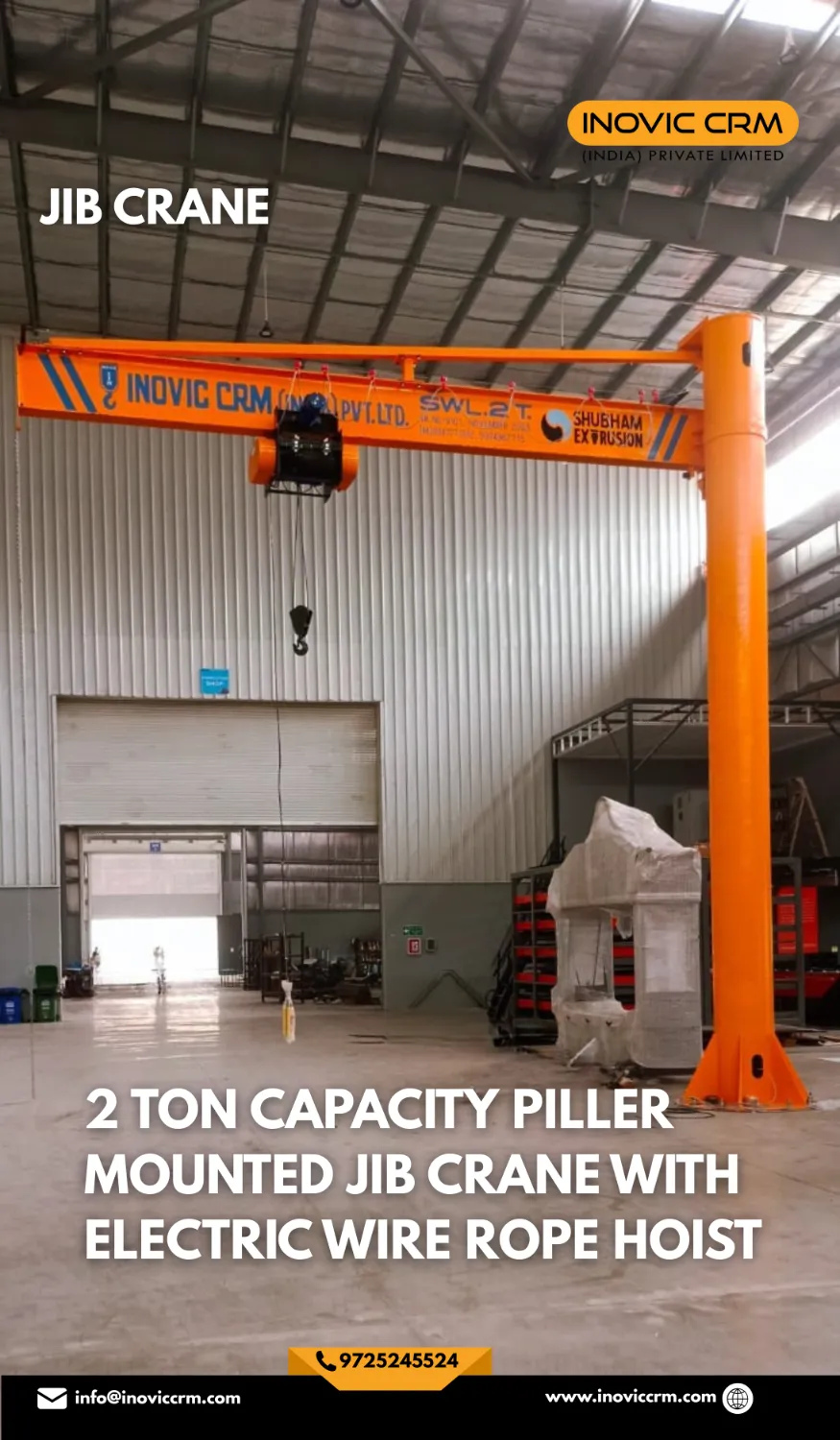
1 . Pillar Mounted Jib Crane
- Mounted on a floor-mounted column
- Up To 360 ° rotation (manual or motorized )
- Suitable for independent workstations
2 . Wall Mounted Jib Crane
- Fixed to RCC column or steel structure
- Up To 220 ° rotation
- No floor space required
3 . Motorized Jib Crane
- Electric slewing mechanism
- Recommended for higher capacities and frequent operations
Technical Specifications (Typical Range)
Parameter Specification Range
Safe Working Load (SWL) | 0.25 Ton to 5 Ton |
Jib Arm Length | 2 m to 6 m |
Lifting Height | customizable |
Slewing Rotation | 90 ° / 180 ° / 270° / 360° |
Slewing Type | Manual / Electric |
Hoist Type | Electric Chain Hoist / Wire Rope Hoist |
Hoist Make Options | Our Make |
Structure Material | Ms |
Duty Class | M4 & M5 |
Power Supply | 415 V ±10%, 50 Hz, 3 Phase |
Structural & Design Features
- I-beam jib arm
- Heavy-duty base plate with anchor bolts
- Precision machined slew bearing or bush arrangement
- Anti-sway design for smooth operation
- High-quality welding
Hoist & Electrical Features
- Electric chain or wire rope hoist
- Electro-magnetic Disc brake
- Limit switches for over-lifting and over-lowering
- Control via pendant or radio remote
- Flameproof / weatherproof options available
Safety Features
- Overload protection
- Mechanical end stops
- Emergency stop push button
- Earth leakage and short-circuit protection
- Compliance with industrial safety norms
Applications of Jib Cranes
- Machine loading and unloading
- Assembly workstations
- Welding and fabrication shops
- Foundries and forging units
- Warehouses and packaging areas
- Maintenance bays
Why INOVIC CRM Jib Cranes?
- Precision engineered for Indian working conditions
- Custom-built as per customer layout and load cycle
- High-quality motors, brakes, and gearboxes
- Strict quality control and load testing
- Reliable after-sales service and technical support
Customer Education & Jib Crane Selection Guide
This guide helps customers understand how to select the right jib crane based on load, usage, layout, and safety—ensuring maximum productivity and long service life.
Step 1: Define the Load (SWL)
- Identify the maximum weight to be lifted (include hook, slings, and fixtures).
- Add a 25% safety margin for dynamic effects.
- Typical ranges: 0.25T, 0.5T, 1T, 2T, 3T, 5T.
Step 2: Determine Working Radius (Jib Arm Length)
- Measure the horizontal reach required from the center of rotation to the farthest pickup/drop point.
- Common arm lengths: 2 m to 6 m.
- Longer arms require stronger columns and foundations.
Step 3: Lifting Height Requirement
- Measure floor to highest hook position.
- Consider headroom constraints (especially for wall-mounted cranes).
- Choose chain hoist for lower headroom; wire rope hoist for higher lifts and heavier loads.
Step 4: Choose Mounting Type
- Pillar Mounted: Independent workstation, 360° coverage.
- Wall Mounted: Saves floor space, 220° rotation.
Step 5: Slewing (Rotation) Method
- Manual Slewing: Light loads, low frequency.
- Motorized Slewing: Higher capacity, repetitive operations, precise control.
- Select rotation: 180°, 270°, or 360° based on layout.
Step 6: Duty Class & Usage Frequency
- Define operating cycles per hour/day.
- M4: Medium duty (regular production).
- M5: Heavy duty (continuous, high-cycle operations).
Step 7: Electrical & Control Options
- Power supply: 415V, 3-Phase, 50Hz.
- Control: Pendant or Radio Remote.
- Protection: Overload relay, limit switches, emergency stop.
Step 8: Safety & Compliance
- Ensure overload protection and mechanical end stops.
- Verify compliance with IS standards.
- Consider flameproof/weatherproof options if required.
Step 9: Civil Foundation & Installation Check
- Verify floor load-bearing capacity.
- Column base plate, anchor bolts, and grouting must match design loads.
- Wall-mounted cranes require structural approval of RCC/steel columns.
Step 10: Future Expansion & Customization
- Plan for capacity upgrades or longer reach if production grows.
- Add options like VFD drives, remote control, or automation interfaces.
INOVIC CRM Engineering Support
Our engineers evaluate your layout drawings, load data, and operating conditions to recommend the most efficient jib crane configuration—from design and manufacturing to installation and commissioning.
Conclusion
A Jib Crane is the perfect solution for efficient, safe, and economical material handling within a limited area. When designed and manufactured correctly, it significantly improves productivity while minimizing operational costs.
INOVIC CRM Jib Cranes deliver strength, precision, and reliability—engineered to lift your productivity.